I study how birds in the Neotropics diversify and how species boundaries form, persist, or break down. My work combines fieldwork, museum specimens, and genetic data. It has three main areas: hybrid zones, the evolution of Neotropical birds, and molt and plumage.
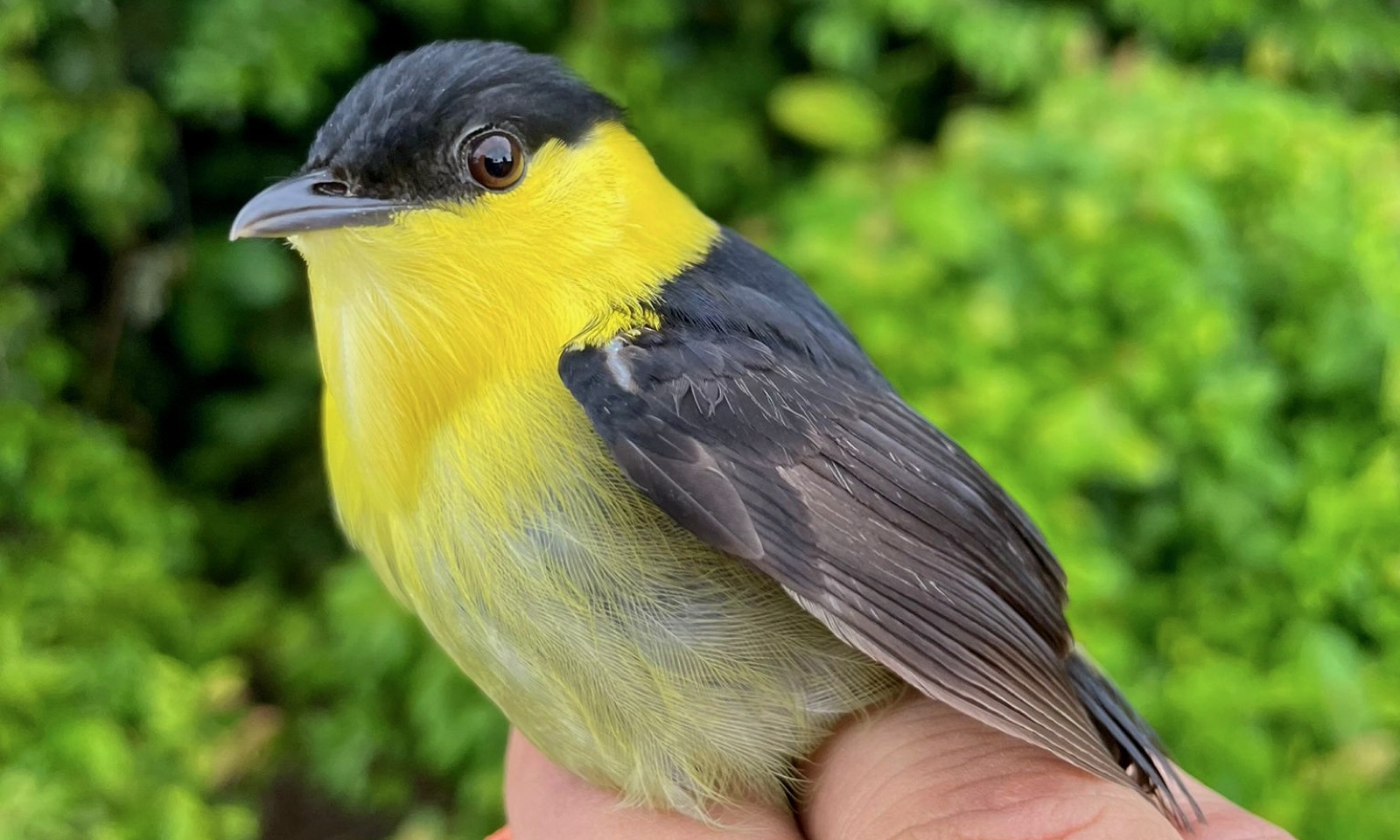
Hybrid Zones
Hybrid zones are places where related species meet and interbreed. They work as natural experiments: by following how genes and traits move between species, we can learn which parts of the genome hold species apart and which pass freely across the boundary. Hybridization can also be a source of new variation and adaptation.
For my Ph.D. at Louisiana State University with Dr. Robb T. Brumfield, I am studying the evolutionary dynamics of the hybrid zone between the White-bearded Manakin (Manacus manacus) and the Golden-collared Manakin (M. vitellinus) in Colombia. Manakins are a classic system for studying hybridization, because conspicuous male plumage traits can cross species boundaries.
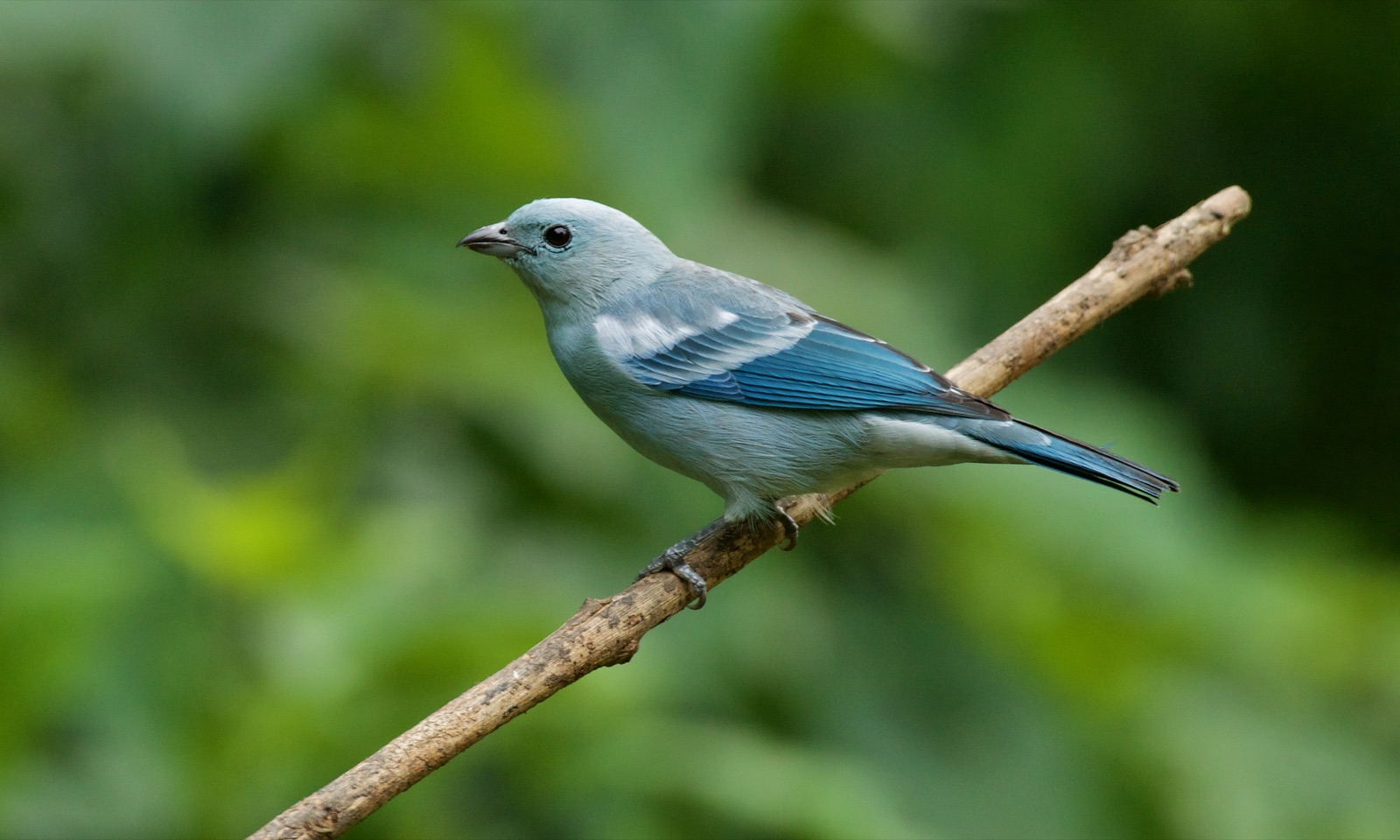
My interest in hybrid zones began with tanagers. In a systematic revision of the genus Thraupis, we found an extensive hybrid zone between the Blue-gray Tanager (T. episcopus) and the Sayaca Tanager (T. sayaca) (Cueva et al. 2022).
Evolution of Neotropical Birds
The Neotropics hold more bird species than any other region on Earth. I am interested in the processes that produced this diversity, from the origin of species to the distribution of birds across landscapes. My fieldwork has taken me to the Llanos of Colombia, the Puna of Bolivia, the Amazon rainforest of Brazil, and the Andean forests of Peru. I have also worked in ornithological collections, including the ICN, IAvH, MZUSP, MCZ, and LSUMNS.
Taxonomy is the basis of this work: we need to know what species exist before we can understand how they evolved. My revision of Thraupis tanagers re-examined species limits within a widespread Neotropical genus (Cueva et al. 2022). At a regional scale, I contributed to the inventory and biogeographic analysis of the birds of San José del Guaviare, a meeting point of Amazonian, Andean, and Llanos avifaunas in Colombia (Acevedo-Charry et al. 2021).
I have also helped build open datasets for comparative studies, including morphological measurements for 606 Colombian bird species (Montoya et al. 2018), body mass data for 1,317 bird species from Colombia (Ocampo et al. 2021), and a dataset of bird–window collisions across the Neotropical region (Piratelli et al. 2025).
Molt and Plumage
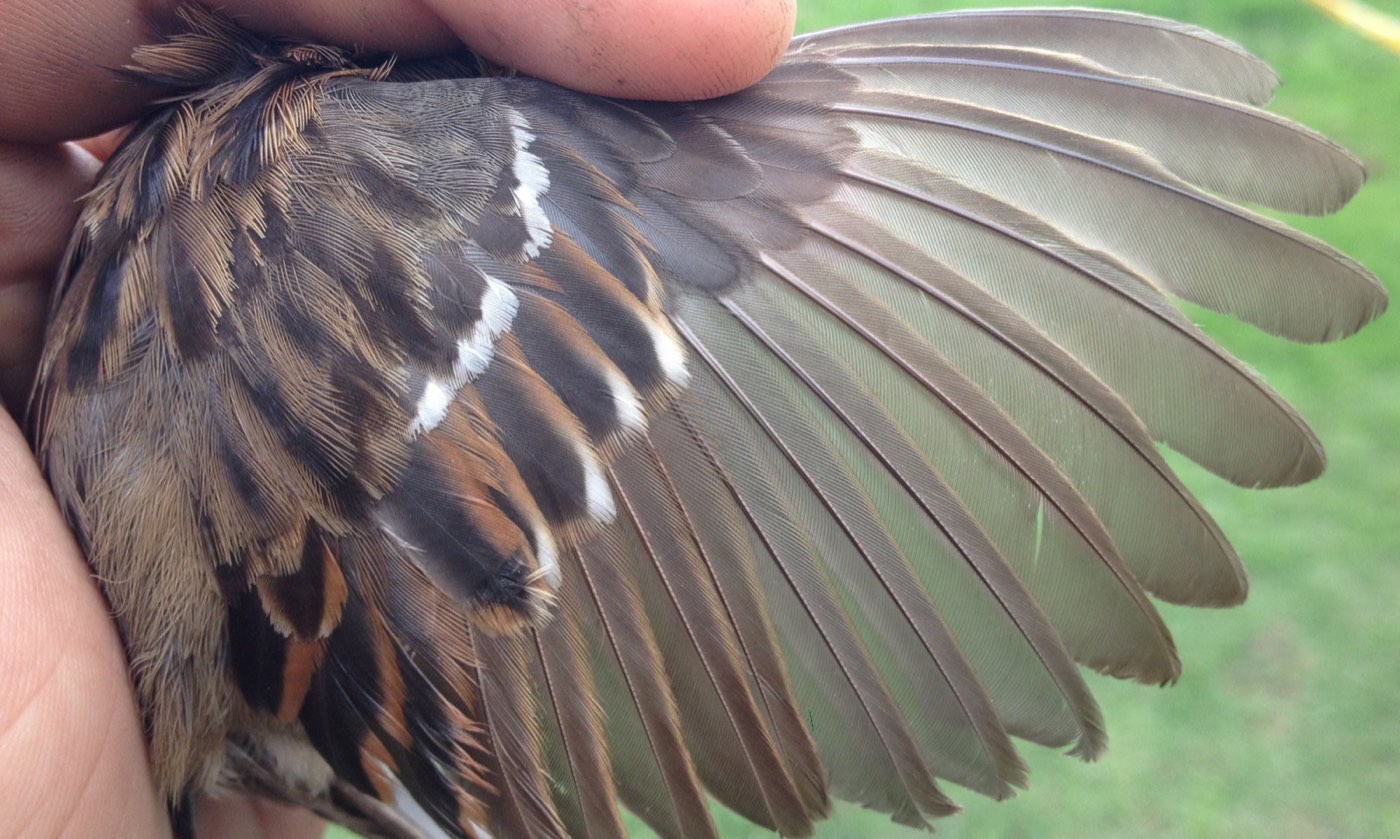
Feathers wear out, and birds must replace them through molt. When and how a species molts shapes its plumage, its annual cycle, and the information that plumage signals to other birds. Molt is also the key to aging birds in the hand, which matters for studies of survival, breeding, and population dynamics. Yet molt in most tropical birds is still poorly known.
I described the molt strategy of the Rufous-collared Sparrow (Zonotrichia capensis) in Bogotá, Colombia, and developed criteria to age individuals in the field (Cueva 2018). I am also interested in unusual plumage variation. In Anthracothorax hummingbirds (mangos), some females show male-like plumage; we reported a new observation and reviewed known cases in the genus (Cueva & Celorio Mosquera 2025).
Plumage also connects my research areas. Color patterns are often the most visible differences between species, and following plumage traits across a hybrid zone helps reveal how species boundaries are kept or broken down.